If you live in Wisconsin your summer starts the same each year… You pull the patio furniture out of the garage, watch a neighbour cannonball into their pool, and dream of building one of your own.
Then reality sets in, your backyard is just an average size, a pool would take over valuable space for your kids/family to run and play.
That’s where many homeowners get stuck. They want the water, the movement, the family memories. They just cannot justify a large pool that they can only use for a slice of the year. Meanwhile, the wellness routines they see online, warm-water recovery, resistance swimming, family soak time, do not slot neatly into an inground rectangle either.
A swim spa answers that push and pull. Same body of water, twelve months a year, one adjustable current for swimming, warm hydrotherapy jets at the other end. Before deciding between a swim spa and a full pool, it helps to line them up side by side, without the marketing gloss, and see which one actually fits your yard, your climate, and your life.
What Sets a Swim Spa Apart
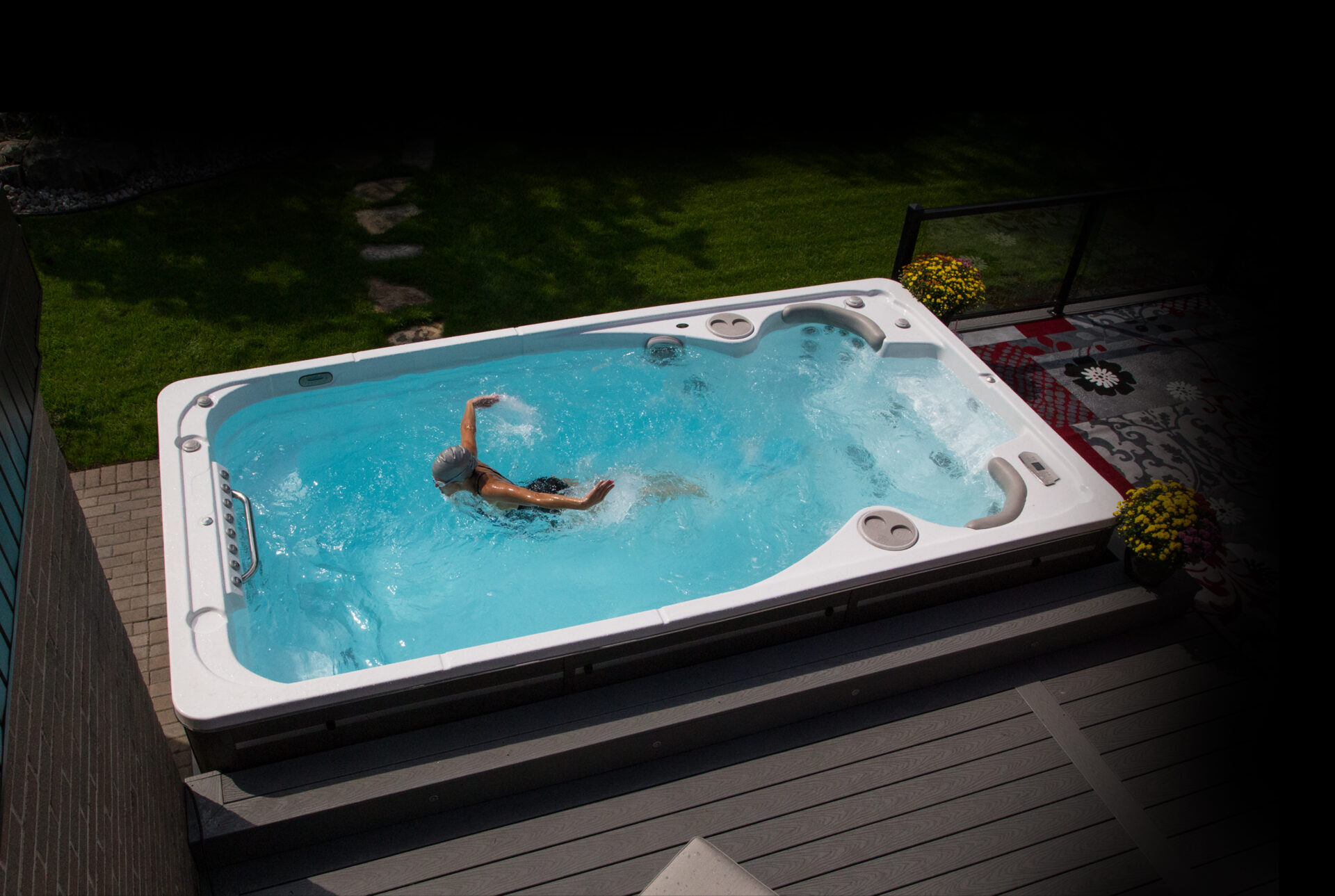
A swim spa is a self-contained unit with a powerful current at one end and hot-tub-style seating at the other. Instead of swimming laps, you swim in place against the current, adjusting speed and resistance to match your workout. When the workout is done, you slide down the bench, click on the hydrotherapy jets, and let the warm water go to work on tight shoulders.
Traditional pools, by contrast, are built for open swimming, playtime, and lounging. They range from vinyl-lined above ground models to concrete inground builds. The water stays cooler, the footprint is larger, and the design centres on volume rather than resistance.
The other big difference is heat. Swim spas hold water between roughly 80 and 104 degrees Fahrenheit, meaning they are usable in a snowstorm. Pools generally cap around 85 in peak summer, and heating a full-size pool through a Wisconsin winter is neither practical nor common. If year-round wellness is on your list, that gap matters more than any other spec sheet number.
You can see how Jacuzzi swim spas are engineered specifically for this dual role on Fox Valley Pool and Spa’s swim spa collection, which walks through the jet layouts, current systems, and seating configurations that put swim spas in a category of their own.
How Your Wisconsin Climate Shapes the Decision
Wisconsin weather does not negotiate. Fox Valley homeowners plan around frost heave, deep freezes, and short peak-swim windows. Both swim spas and pools can absolutely live here, but the timeline of use looks very different.
Year-Round Use in Fox Valley Winters
A well-insulated swim spa sits at a warm 100 degrees while the snow builds up on the cover. Owners regularly report that their favourite sessions are in January, stepping through fresh snow into steaming water. Traditional pools shut down for the season by early October, get winterized, and reopen after Memorial Day.
If you picture yourself swimming, soaking, or recovering in December, a swim spa is the honest answer. If your family only uses water in T-shirt weather, a pool can still be a great fit.
Installation Windows Around Wisconsin Weather
Pool builds are calendar-locked. Excavation, plumbing, and concrete work all require unfrozen ground and predictable weather, so most inground projects run from late spring to early fall. Above ground pools have a wider install window but still prefer thawed soil.
Swim spa deliveries are more flexible. Because the unit arrives largely complete, most of the on-site work is pad prep, electrical, and placement. Installations happen through much of the year, weather permitting. That flexibility can shave months off the wait if you decide in the wrong season for a traditional build.
Space Requirements and Backyard Footprint
Backyard size drives more of this decision than any other factor. A standard swim spa runs roughly 14 to 19 feet long by 7 to 8 feet wide. That fits on a reinforced pad, patio, or deck in most Fox Valley lots without touching setback lines. Some homeowners even bring swim spas indoors or into a three-season room.
A traditional pool of any real swim length typically requires 15 by 30 feet of clear ground, plus deck space, plus safety fencing per Wisconsin code. That adds up quickly on a suburban lot in Appleton, Neenah, or Kaukauna. Corner lots and heavily wooded properties often rule out inground entirely.
There is also access to consider. Above ground pools and swim spas both arrive with a delivery truck, but pool components can usually be walked in through a gate. Swim spas need a clear path with enough clearance for a boom or trailer, so a site visit before you order is smart. Fox Valley’s team handles those pre-delivery site checks routinely.
If the yard truly cannot hold either, a compact plunge pool or a full-size Jacuzzi hot tub may serve better. Owners with limited space often look at the Jacuzzi hot tub lineup for the same wellness benefits in a much smaller footprint.
Maintenance Realities Season by Season
Both water bodies need chemistry, filtration, and cleaning. The scale is what changes.
A swim spa holds roughly 1,500 to 2,500 gallons. That volume treats quickly, filters cleanly, and only needs a full water change every three to four months when balanced correctly. Jets and cover care are the main ongoing tasks.
A pool of standard swim size holds anywhere from 15,000 to 30,000 gallons. Chemistry adjustments are larger, filter cycles run longer, and opening and closing the pool each season is a full weekend project. Skimmers, liners, and pumps all have their own maintenance rhythms.
Winter also splits the difference. Swim spas stay running and are actually cheaper to maintain during the cold months than to shut down and drain. Pools require full winterization: draining lines, adding antifreeze, and sealing the cover before the first hard freeze.
For owners who want help with either side of that workload, Fox Valley’s service department covers openings, closings, water testing, and equipment repairs across the region.
Fitness, Family, and Therapy Use Cases
Both options can be family centrepieces. The right pick depends on what “using the water” actually looks like in your household.
Swimming and Training in a Swim Spa
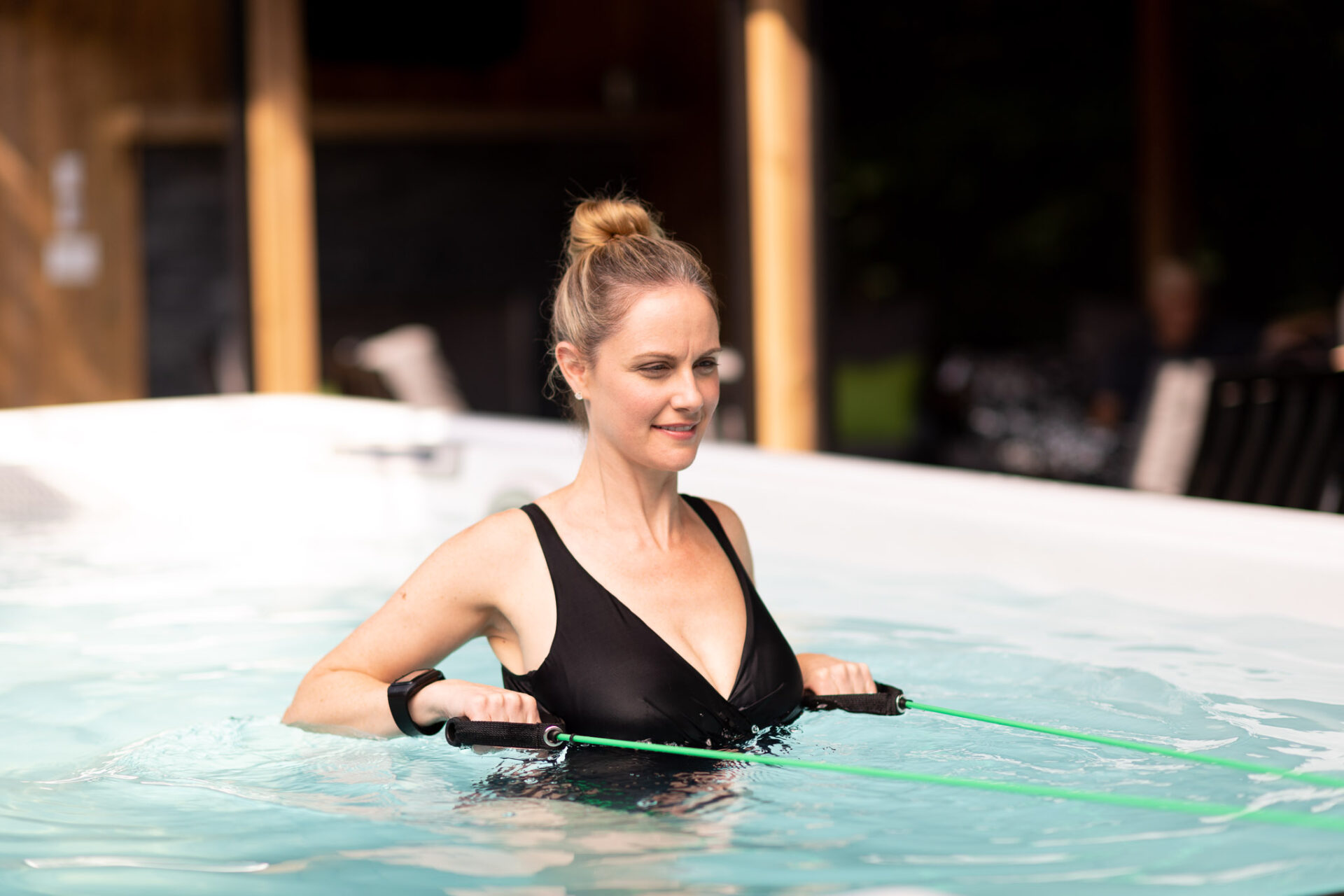
The current system is the star. It lets one person swim continuously against adjustable resistance, which is closer to open-water training than lap swimming in a short pool. Runners use them for cross-training, swimmers use them for stroke work, and physical therapists prescribe them for low-impact rehab. The warm side handles muscle recovery and hydrotherapy right after the workout.
For a triathlete, a stroke-focused swimmer, or an aging athlete who needs low-impact volume, a swim spa quietly outperforms a pool of the same size.
Pool Recreation for Larger Families
Big pools shine for open play. Multiple kids swimming, a floating game of catch, laps in a straight line, and hosting a summer party all favour a traditional pool’s footprint. Grandparents lounge on the deck, teenagers do cannonballs, and the space soaks up an entire summer afternoon.
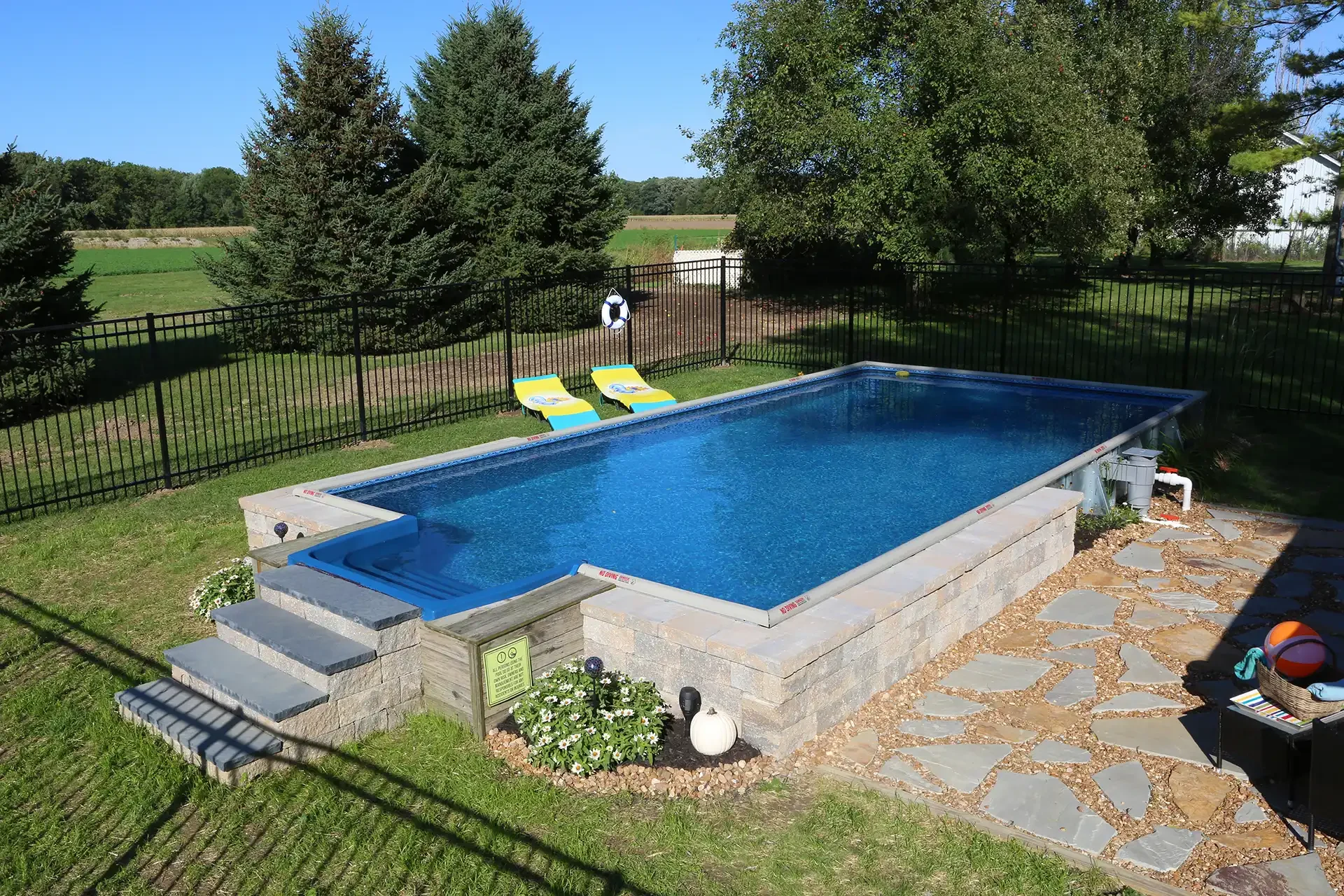
If your household has four or more kids or you host regularly, that open volume is hard to replicate in a swim spa. Fox Valley carries a range of above ground pool options that hit the recreational sweet spot without the commitment of an inground build.
Long-Term Value in Your Wisconsin Home
Resale conversations vary by neighbourhood, so treat these as trends rather than promises. Well-installed swim spas often move with the homeowner because they are self-contained units. Buyers see them as premium wellness features, which can raise a home’s perceived value without locking the next owner into a maintenance commitment they did not ask for.
Traditional inground pools are more polarizing. Some buyers love them and pay a premium. Others see a maintenance obligation and walk away. In Wisconsin, that polarization tilts a bit further because the pool is only usable for a portion of the year.
Above ground pools sit somewhere in between. They are removable if the next owner does not want one, which broadens the resale audience.
Beyond resale, both options add lifestyle value. The right question is not “which one increases my equity most” but “which one gets used four times a week for the next decade.” That is the answer that pays back in every measurable way.
Financing considerations often shape the timeline. Fox Valley works with lending partners so homeowners can spread the investment across a schedule that fits their budget. The financing options page walks through what those programmes look like.
Frequently Asked Questions
Is a swim spa easier to install than a pool in Wisconsin?
Generally yes. Swim spas require a level, reinforced pad and a dedicated electrical run, but they arrive as a mostly complete unit. Pools involve excavation, framing, plumbing, and cure times. Timelines from decision to first swim run days for a swim spa and weeks for a pool.
Can a swim spa really replace lap swimming?
For most swimmers, yes. Adjustable current lets you dial in resistance for a warm-up jog, a steady endurance set, or a sprint interval. Some competitive swimmers still prefer open water for long distance, but the majority of home swimmers find a swim spa meets or exceeds their needs.
Which one is cheaper to heat through a Wisconsin winter?
Swim spas are far cheaper to heat and run year-round because they hold a small volume of insulated water. Heating a full-size pool through winter is not practical for most homes, which is why traditional pools are winterized and shut down instead.
Do I need a fence around a swim spa?
Wisconsin’s pool barrier requirements target pools and spas capable of holding water above certain depths. Swim spas typically stay covered when not in use, which meets many local requirements, but check with your municipality in Appleton, Neenah, or wherever your home is located before installation.
How long do swim spas and pools last?
A well-maintained Jacuzzi swim spa comfortably lasts 15 to 20 years, with individual components replaceable along the way. Above ground pools generally run 10 to 20 years depending on the liner and structure, and inground builds can last 25 years or more with periodic resurfacing.
The Bottom Line for Fox Valley Homeowners
There is no universal winner between a swim spa and a pool. There is a best fit for your yard, your climate, and how you actually plan to use the water. Wisconsin’s short outdoor swim season pushes many Fox Valley homeowners toward year-round wellness, and swim spas answer that neatly. Larger families with the space and the appetite for full open swimming often lean traditional.
Ready to see both options side by side? Stop by the Fox Valley Pool and Spa showroom in Appleton or reach out to the team for a walkthrough tailored to your backyard. The right water is the water you actually use.